
Present Problems vs Future Problems
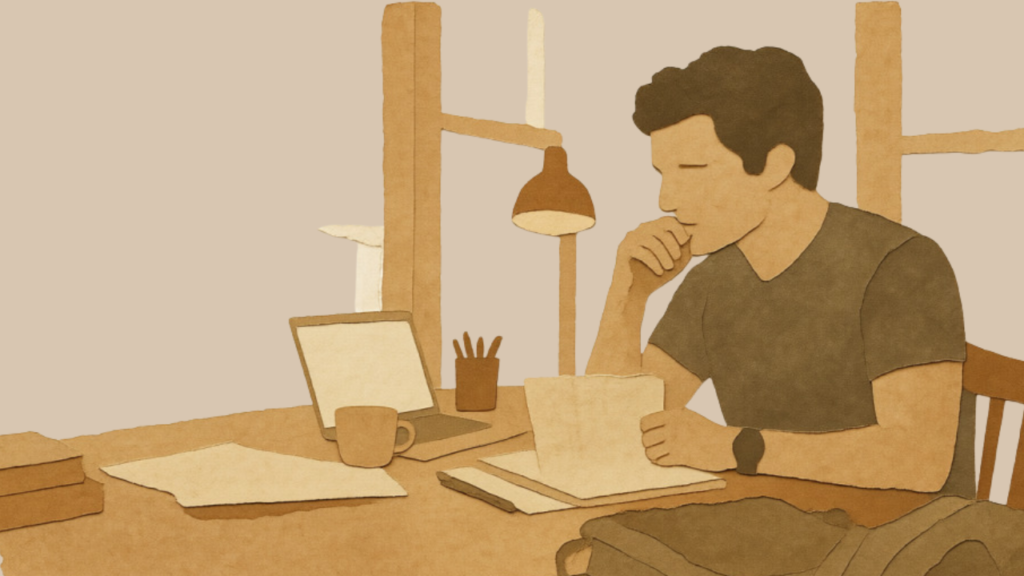
If you’ve ever searched for how to stop overthinking, you’ve probably noticed that most advice sounds surprisingly simple.
Focus on the present.
Stop worrying.
Take action.
While those ideas make sense, I’ve always found them easier to understand than to actually follow.
The reason is that overthinking rarely feels like overthinking when you’re doing it. Most of the time it feels responsible. It feels like planning, preparing, or trying to avoid future mistakes. You’re not sitting there thinking, “I’m going to waste the next hour worrying.” You’re usually convincing yourself that you’re solving a problem.
The strange part is that many of those problems don’t even exist yet.
Looking back, I’ve spent a surprising amount of time worrying about situations that never happened. Future conversations. Future failures. Future outcomes. Future versions of problems that were completely different from the ones I eventually faced.
And while I was busy thinking about those future problems, I often ignored the things I could have done today.
Future Problems Feel More Important Than Present Ones
One thing I’ve noticed is that future problems have a way of demanding attention.
Maybe it’s because uncertainty feels uncomfortable. Maybe it’s because our brains prefer trying to predict problems rather than waiting for them to arrive. Whatever the reason, it’s surprisingly easy to spend an entire day worrying about something that may never happen.
The problem is that future anxiety creates the illusion of productivity.
You feel busy because you’re thinking so much. You feel responsible because you’re considering different possibilities. But thinking about a problem and solving a problem aren’t always the same thing.
I’ve fallen into that trap more times than I’d like to admit.
Sometimes I’d spend hours worrying about the future while avoiding a small task that could have improved my situation immediately. The future problem felt bigger, so it got more attention. The present problem felt ordinary, so it got ignored.
Looking back, that rarely helped.
The Problem That Actually Exists
A question I’ve started asking myself is surprisingly simple:
“What problem exists right now?”
Not tomorrow.
Not next month.
Not six months from now.
Right now.
It’s a small shift, but it changes the way I think.
For example, imagine you’re worried about failing at something in the future. The future problem might be failure. The present problem might simply be that you haven’t started yet.
Those are two very different problems.
The future version exists mostly in your imagination. The present version is something you can actually do something about.
That doesn’t mean future planning is useless. It just means present problems usually deserve more attention than hypothetical ones.
Living In The Present Isn't About Ignoring The Future
For a long time, I misunderstood what living in the present actually meant.
I assumed it meant not thinking about the future at all. That never felt realistic. We all need to plan, set goals, and think ahead occasionally.
What I’m starting to realise is that living in the present has more to do with where your energy goes.
Planning for the future is useful.
Living entirely in the future is exhausting.
There’s a difference between preparing for something and mentally experiencing it a hundred times before it happens. One helps. The other usually creates stress without creating progress.
That’s something I’ve had to learn repeatedly.
Why Overthinking Feels Productive
This is probably what makes overthinking so difficult to notice.
When you’re procrastinating, you usually know you’re procrastinating.
When you’re distracted, you usually know you’re distracted.
Overthinking is different.
It disguises itself as responsibility.
You tell yourself you’re being careful. You tell yourself you’re considering every possibility. You tell yourself you’re preparing for what’s ahead.
Sometimes that’s true.
Other times, you’re simply stuck in a loop.
I explored something similar in Overthinking Is Ruining Your Consistency, where I talked about how thinking too much can stop us from taking action. The more I reflect on that idea, the more I believe action is often what breaks the cycle.
Not perfect action.
Just enough action to shift your attention back to the present.
Progress Over Perfection
I’m still figuring this out myself.
There are plenty of days when I catch myself worrying about things that haven’t happened yet. There are still moments when future anxiety feels more urgent than the task sitting directly in front of me.
But one thing I’ve started noticing is that life becomes a little easier when I focus on the problem I can actually solve today.
Sometimes that’s sending the message.
Sometimes it’s starting the task.
Sometimes it’s simply taking the first step instead of planning the next twenty.
A while back, in The Cost of Comfort Is Higher Than It Looks, I wrote about how avoiding small discomforts today often creates bigger problems later. Looking back, overthinking works in a similar way. We spend so much time preparing for future problems that we accidentally create new ones in the present.
Maybe that’s why learning how to stop overthinking isn’t really about controlling every thought.
Maybe it’s about gently bringing your attention back to what’s in front of you.
Because most of the time, the problem we can solve today is far more useful than the problem we’re imagining tomorrow.