The Best Workout Is the One You Actually Do
There have been plenty of days when I’ve planned a workout in my head before I’ve even gotten out of bed.
An hour at the gym. Every exercise mapped out, enough energy to push myself, and no interruptions.
It always sounds great in theory.
Then the day begins.
Work takes longer than expected. Traffic eats into the evening. I don’t sleep as well as I’d hoped. Suddenly, that one-hour workout doesn’t seem realistic anymore.
For a long time, that usually meant I didn’t work out at all.
At the time, it felt like a sensible decision. If I couldn’t do the workout I’d planned, I’d do it properly tomorrow instead.
The problem was that tomorrow often looked a lot like today.
The more I noticed this pattern, the more I realized it probably wasn’t just me. I think a lot of us quietly wait for the perfect workout without even realizing we’re doing it. We picture an ideal version of exercising and slowly start treating it as the minimum standard.
Most of the time, reality loses.
Ironically, that’s how we end up doing nothing when we could have done something.
Fitness Habits Don't Need Perfect Conditions
When I first started paying attention to my own fitness habits, I assumed consistency came from having enough discipline. If I could just become more motivated, I’d never miss a workout.
That sounded reasonable until I noticed something.
Even on weeks when I felt motivated, life still got in the way. Plans changed, unexpected things came up, and some days I simply didn’t have the same energy I had the day before.
Waiting for ideal conditions meant I was waiting for something that rarely existed.
That’s when I realized the problem wasn’t that life kept interrupting my routine. It was that I’d built a routine that only worked when life didn’t interrupt it.
That realization changed the question I started asking myself. Instead of wondering whether I had enough time for the workout I’d planned, I started asking what kind of workout actually fit the day I was having.
It seems like a small shift, but it completely changed the way I thought about building fitness habits.
The Real Problem Isn't Time
For a long time, I blamed time.
Sometimes that was true. Most of the time, though, I had enough time to do something. I just didn’t have enough time to do exactly what I’d imagined.
There’s an important difference.
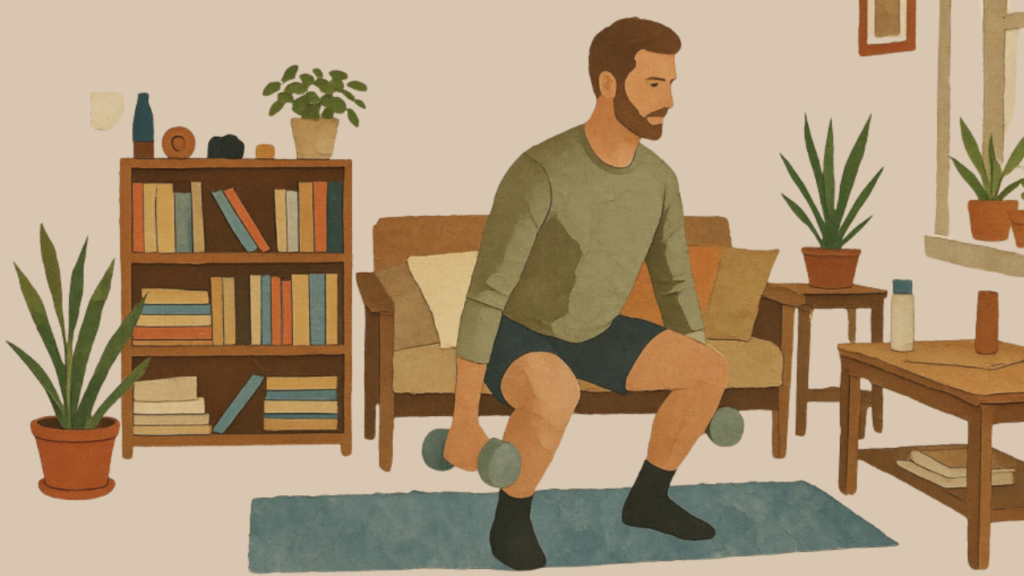
A twenty-minute workout didn’t feel worthwhile because it wasn’t an hour. A quick walk felt like settling. A few exercises at home felt like cheating.
Looking back, none of those thoughts came from reality. They came from comparing what I could do with what I wished I could do.
Every time I made that comparison, the real workout never stood a chance.
The perfect workout kept winning—but only in my imagination.
Exercise Consistency Is Built on Ordinary Days
When people talk about fitness, they usually remember the highlights.
The personal best.
The first pull-up.
The day they finally ran farther than they thought they could.
Those moments feel great, but I don’t think they’re what build exercise consistency.
That happens on much quieter days.
The days when you’re tired but still go for a walk.
The days when you shorten your gym session because that’s all your schedule allows.
The days when you don’t feel particularly motivated but decide to move anyway.
Nobody celebrates those workouts, even though they’re often the ones doing the real work. Those are the workouts that quietly keep the habit alive.
I’ve come to appreciate those ordinary workouts far more than the impressive ones because they’re the reason I don’t have to start over every few weeks.
If you’ve ever felt like one missed workout means you’ve ruined your routine, you might also enjoy One Missed Workout Isn’t The Problem, where I explored why a single missed session matters far less than the all-or-nothing mindset that often follows it.
Consistent Fitness Looks Less Exciting Than We Imagine
I used to picture consistent fitness as never missing a workout, never feeling lazy, and always following the plan.
Now I think it looks much more ordinary than that.
Some weeks you’ll exercise more than others. Some workouts will feel amazing. Others will feel average from beginning to end.
That’s not inconsistency.
That’s just life.
I’ve realized consistency isn’t about avoiding interruptions. It’s about becoming someone who knows how to continue after them.
That shift took away a lot of pressure because I stopped treating every imperfect week as proof that I’d failed.
A Question That Changed My Thinking
One question has helped me more than any workout plan ever has.
Instead of asking, “Can I do my full workout today?”
I started asking, “What can I do with the time and energy I actually have?”
Sometimes the answer is a full gym session. Other days it’s twenty minutes, or even a walk after dinner because that’s all I can manage.
None of those options are wasted.
They all remind me that I’m someone who comes back to taking care of myself, even when the day doesn’t go to plan. That mindset has made exercising feel less like passing or failing a test and more like something I simply keep returning to.
Progress Over Perfection
One thing this has taught me is that our bodies don’t care whether a workout matched the one we planned.
They respond to what we actually do.
The perfect workout will always exist somewhere in our imagination. It’ll always have more time, more energy, and fewer interruptions than real life ever does.
Real progress happens somewhere much less exciting.
It happens on ordinary Tuesday evenings when you’re tired but still decide to move for twenty minutes.
It happens when you swap an hour at the gym for a quick walk instead of skipping both.
It happens every time you stop treating an imperfect workout as a wasted one.
The same idea applies beyond exercise too. In Why One Unhealthy Meal Won’t Ruin Your Progress, we looked at why one decision rarely determines your long-term progress.
I’ve started thinking that the goal was never to build a routine that only works when life is predictable, but one that’s flexible enough to keep going when life isn’t.
Because in the end, the goal isn’t to build a routine that only works when life is easy.
It’s to build one that works with real life instead of waiting for perfect conditions.