Why I Stopped Calling Food "Good" and "Bad"
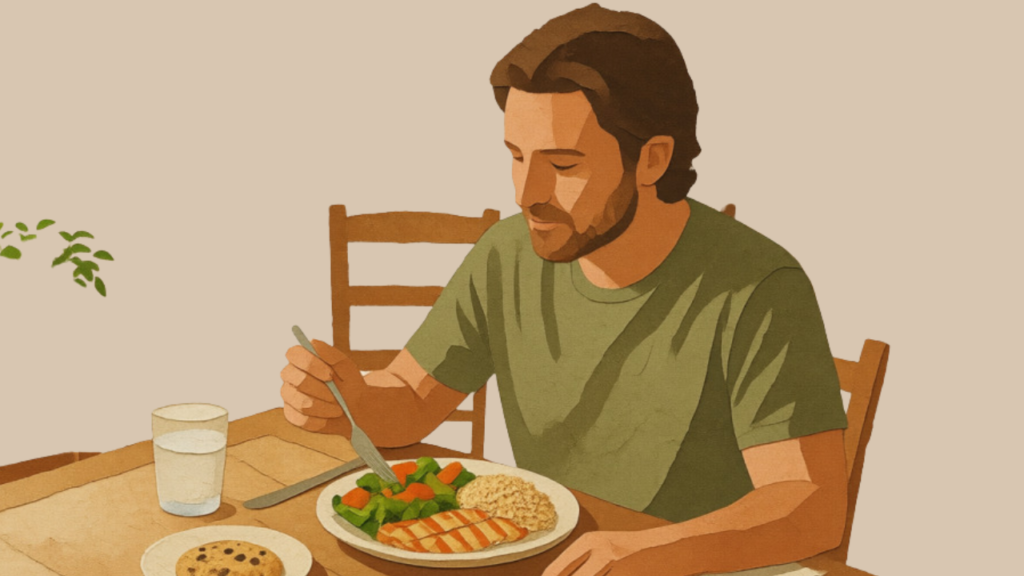
There have been plenty of evenings when I’ve stood in the kitchen after eating something sweet and immediately started judging myself for it. Before I’d even finished the last bite, I’d already decided that I’d eaten “badly” and promised myself I’d eat clean the next day.
At the time, I thought those thoughts were helping me build a healthier relationship with food.
Looking back, I think they were doing the opposite.
The more I labelled certain foods as “good” and “bad,” the more food guilt seemed to follow me around. Eating wasn’t just about hunger or enjoyment anymore. It started feeling like I was constantly passing or failing some invisible test, and that wasn’t making my healthy eating habits any easier to maintain.
Why We Label Foods in the First Place
I can understand why so many of us end up thinking about food this way.
Calling one food “good” and another “bad” feels simple. It gives us clear rules to follow and makes healthy eating seem easier to navigate. If vegetables are good and chocolate is bad, surely the answer is just to eat more of one and less of the other.
At first, that kind of thinking can even feel motivating.
The problem is that food isn’t just something we think about in ideal situations. We eat during celebrations, stressful weeks, family dinners, holidays, late nights, and busy afternoons when convenience often wins over careful planning.
Those simple labels don’t always survive real life.
Some foods are certainly more nutritious than others, and I don’t think pretending otherwise is helpful. But I’ve started wondering whether calling foods “good” and “bad” quietly changes the way we think about ourselves after we eat them.
When Food Becomes a Moral Test
One thing I’ve noticed is that the labels rarely stay attached to the food.
Eventually, they start attaching themselves to us.
A takeaway becomes a “bad meal,” which somehow turns into a “bad day.” A slice of cake at a birthday becomes proof that we’ve lacked discipline. Before long, the conversation isn’t really about nutrition anymore. It’s about guilt.
The strange part is that food guilt never seemed to help me make better choices.
If anything, it often made things worse.
Once I’d decided I’d already failed, making the next balanced choice didn’t feel very important. I wasn’t responding to the meal anymore. I was responding to the story I’d created about it.
That’s one reason I related so much to the idea behind Why One Unhealthy Meal Won’t Ruin Your Progress. One meal rarely changes the direction you’re heading. The belief that it has often does.
A Healthy Relationship With Food Looks Different
The more I’ve thought about it, the more I think a healthy relationship with food has less to do with eating perfectly and more to do with removing unnecessary pressure from everyday choices.
That doesn’t mean every meal is equally nutritious.
Some foods will always offer more nutritional value than others, and building healthy eating habits still means trying to make balanced choices most of the time.
The difference is that balance doesn’t require turning food into a measure of character.
I’ve found it much easier to make healthier decisions when I stop treating every meal as a verdict on whether I’ve been “good” or “bad.” Instead, I can simply acknowledge that some meals nourish my body more than others without feeling like my self-worth changes alongside my plate.
That perspective feels much more sustainable because it leaves room for ordinary life instead of expecting perfection from it.
What Changed My Thinking
I don’t think one mindset shift solved everything, but it changed the questions I started asking myself.
Instead of wondering whether I’d eaten a “good” meal or a “bad” one, I began asking whether this was roughly how I wanted to eat most of the time.
That question feels much lighter to carry.
It accepts that one meal doesn’t have to represent my entire diet, just as one workout doesn’t represent my entire fitness journey.
On busy days, the answer isn’t always a perfectly balanced meal, and that’s okay. I explored that idea more in Eating Healthy On Busy Days, where I realised that healthy eating often becomes more sustainable when we stop expecting ourselves to make perfect choices regardless of what’s happening in our lives.
I’ve found that this way of thinking removes pressure without removing responsibility. I still want to make nutritious choices more often than not. I just don’t believe those choices need to come from guilt anymore.
Progress Over Perfection
The longer I spend trying to improve my nutrition, the less interested I become in dividing foods into neat categories of “good” and “bad.”
Some meals nourish the body more than others.
Some simply nourish the moment.
I think both can exist within healthy eating habits without undoing the progress we’re trying to make.
For me, Progress Over Perfection has never meant ignoring nutrition or pretending every food is the same. It means building a healthy relationship with food that’s flexible enough to survive birthdays, holidays, cravings, stressful weeks, and all the ordinary moments that make life feel real.
Because real progress doesn’t come from never eating imperfectly.
It comes from not letting one meal, one craving, or one label convince you that you’ve failed.